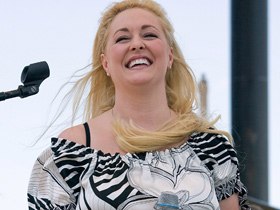
U. S. Department of Justice v. Custody Court System  

Posted by Claudine Dombrowski

Courtesy American Mothers Political Party and Times Up!

Written by Barry Goldstein, Esq

The Family Court Mafia: U.S. DOJ v Custody Courts

photo courtesy Family Court Crisis - Abusers Get Child Custody - originally published Times Up!

Protective mothers have been complaining about mistreatment by the custody court system, but have routinely been dismissed as “disgruntled litigants.” As recently as the beginning of the Battered Mothers Custody Conferences in 2004, there was little professional support for protective mothers. The mothers’ complaints have now been confirmed and supported by the domestic violence community, many women’s organizations, numerous governmental agencies, many in the academic community and a substantial body of research such as contained in our book DOMESTIC VIOLENCE, ABUSE and CHILD CUSTODY.

Last summer at the NCADV Conference, Dr. Daniel Saunders of the University of Michigan and some of his colleagues presented their findings from a major Department of Justice study that confirms the findings in our book and other research that the present custody court practices for domestic violence cases are deeply flawed. The publication of these findings has taken longer than expected as Dr. Saunders and the Justice Department seek to carefully present the information in a clear and accurate manner, but they should soon be available on the Department of Justice web site. Many of us who seek to reform the broken custody court system are excited about this study because it should be difficult for the courts to dismiss or ignore because of where it comes from. Significantly, the findings are incompatible with a continued belief that the present practices are working for the benefit of the children the courts are supposed to protect.


Custody Courts Frequently Disbelieve Valid Abuse Complaints

Custody courts have a particularly poor record in responding to domestic violence cases. The research demonstrates that court professionals reject a high percentage of valid complaints by protective mothers. This problem has been confirmed in many ways. It is confirmed based on the frequency of mistaken outcomes. Although battered mothers make deliberately false allegations only one or two percent of the time, in contested custody cases the alleged abuser wins custody or joint custody over seventy percent of the time. Subsequent events regularly confirm courts’ mistakes. This occurs when men found safe by the court professionals are later convicted or otherwise found to have to have committed domestic violence, sexual abuse, murder or other similar crimes.

The revelations of the Courageous Kids Network further demonstrate the frequency in which courts fail to recognize valid complaints of abuse. Courageous Kids are young adults who have aged out of their custody orders and decided to speak out about the harm caused by these orders. The context is important in understanding their stories. These are cases in which the court disbelieved the mothers’ abuse allegations and gave the fathers complete control. The children have been threatened, coerced and punished if they continue to complain about their father’s abuse or seek a relationship with their mother. In other words the fathers have had tremendous assistance in silencing the children. Accordingly the children now speaking out represent a small minority of those mistreated by fathers the court believed were safe. The descriptions by the Courageous Kids demonstrate the fathers deliberately sought to hurt the mother and children based upon their belief system that the mother had no right to leave them. The children have had little or no contact with their mothers often for many years so we know the mothers could not be influencing the children’s decision to speak out about the fathers’ abuse. These are all too common examples of cases in which the court professionals failed to believe valid allegations of abuse.

The research not only demonstrates the fact that the custody courts get a large majority of domestic violence cases wrong, but also that the standard practices used by court professionals are deeply flawed and make it difficult for judges to recognize legitimate complaints about domestic violence and child abuse.

Court professionals routinely discredit allegations of abuse based upon factors that are not probative. At the same time these professionals do not understand the importance of looking to the abusers’ patterns of controlling and coercive behavior in order to recognize domestic violence. The court professionals often make the mistake of considering each incident and each allegation separately. Genuine domestic violence experts understand the importance of context in recognizing domestic violence, but the mental health and other professionals relied on by the courts do not understand the importance of context and thus make it more difficult to recognize valid allegations of abuse.

One of the big obstacles to recognizing valid abuse complaints is the common use of mental health and other professionals without expertise in domestic violence. The main purpose of considering domestic violence in custody cases is to protect the safety of children. Nevertheless the evaluators relied on by custody courts rarely know how to conduct a safety assessment or what behaviors have been associated with higher lethality and other dangers. The evaluators do not understand domestic violence dynamics and often are unfamiliar with the effects of domestic violence on children or other information based upon the specialized body of scientific research that could be used to better understand domestic violence issues and recognize truthful allegations of abuse.

The new Department of Justice study helps explain why the evaluators and other professionals relied on by custody courts routinely fails to recognize domestic violence. The study found that most evaluators and other professionals relied on by the courts do not have adequate domestic violence training and those with inadequate training are more likely to believe in the myth that women frequently make false allegations of abuse to gain an advantage in litigation. The professionals who believe this myth, in turn are more likely to make recommendations that harm children. In other words judges have little chance to protect the children under their control as long as they rely on these unqualified professionals and tend to believe their deeply flawed analysis.

Judges often become defensive when protective mothers or their attorneys request that any evaluator or other court professional be required to have domestic violence expertise in order to be appointed. We have repeatedly seen judges refuse to listen to domestic violence experts offered on behalf of protective mothers. The courts often focus on the need for a mental health degree even though the academic training for most mental health professionals included no or virtually no domestic violence instruction and the law does not require advance degrees to qualify as an expert (a common example is a mechanic without a high school degree who can testify as an expert in automotive repair based on experience and training).

In recent years most court systems have encouraged and usually required some domestic violence training for court professionals. This is a good thing but has often been implemented in ways that undermine the purpose. Many of the trainings include substantial misinformation such as the belief most contested custody cases are “high conflict” when the research establishes a large majority are really domestic violence cases. Some of the trainings even include Parental Alienation Syndrome (sometimes by another name because of its deserved notoriety) even though it was recently again rejected for inclusion in the DSM-V because there is no scientific basis for it. Many of the trainings fail to include domestic violence advocates or other genuine experts in domestic violence.

We have also seen some really good programs used to train court professionals, but I have heard many trainers complain that some of the judges, evaluators and lawyers pay little attention to the valuable information presented. In one Queens County, New York case I cross-examined an experienced evaluator who went to a really excellent domestic violence training in order to qualify as a parent coordinator. They provided numerous excellent research studies that could have helped him recognize domestic violence and protect children. During my cross-examination it became clear he never read the research and was unfamiliar with the current scientific research he needed to understand the case. When I pressed him about the training he described it as “not a life changing experience.” This was a man who needed a life changing experience because he failed to recognize the obvious history of abuse by the father, demanded the mother cooperate with her abuser and when she continued to try to protect herself and her son, the unqualified evaluator recommended custody for the abusive father. The judge failed to discredit the evaluator based on his failure to read or consider the current scientific research provided at the training.

We need much more and better trainings for court professionals, but there is also the danger that attending trainings can give judges and other professionals a false sense of confidence in their understanding of domestic violence. The findings by Dr. Saunders and his colleagues that most court professionals have inadequate training in domestic violence confirms our concern that in most cases the professionals relied on by the court are not qualified to participate in a domestic violence case without the assistance of a genuine expert. Even if the judge has received good training the court is likely to be influenced by unqualified evaluators and other court professionals.

The failure to possess adequate training in domestic violence means that it will be difficult for these professionals to recognize and respond effectively to domestic violence, but the widespread belief in the myth that women frequently make false allegations of abuse is a bias that strongly undermines the cases of protective mothers. These mistakes result in frequent findings denying the mother’s abuse allegations which is exactly what the other research has found. If a professional believes the myth they will expect to see false allegations and without training in how to recognize domestic violence they have little chance to get these cases right and protect the children. Even worse, courts having found against the mothers because of the deeply flawed practices and biases are severely punishing mothers and children because the mothers continue to believe their true allegations despite the disbelief of the unqualified court professionals.

A few months ago, in this forum, I wrote an article about the extreme decisions we often see in domestic violence cases.These are decisions in which the alleged abuser receives custody and the mother who was the primary attachment figure is limited to supervised or no visitation. The primary attachment figure is the parent who provided most of the child care during the first couple of years of the child’s life. When children are separated from their primary attachment figure they are significantly more likely to suffer depression, low self-esteem and to commit suicide when older. It can never be right to separate children from their primary attachment figure unless she is unsafe such as a drug addict, someone who beats the kids or otherwise poses a danger. In most of these cases the father allowed or even demanded the mother provide child care until she decided to leave him. It should be obvious that her decision to leave a man she found to be abusive does not make the mother unsafe. Unqualified court professionals frequently limit the mother’s contact with her children based upon some version of alienation or pathologizing the mother based on psychological tests that were not made for the populations seen in custody cases. We know the diagnosis is not safety related because the mother functions fine in all other aspects of her life except interacting with her abuser and the court professionals supporting him. These are not safety issues so these extreme decisions can never be beneficial to the children.

The reliance on court professionals with inadequate training and belief in the myth takes place in the context of many other common mistakes discussed in earlier research. The courts cannot protect mothers and children in domestic violence cases if they cannot recognize domestic violence when it is present. The frequent decisions that harm children are confirmed by later findings and information, the extensive research court professionals routinely fail to consider and the new Department of Justice study and they provide multiple confirmations of the present inability of custody courts to recognize domestic violence and child abuse when it exists.


Misuse of Mothers’ Anger and Emotion

Let’s look at this issue from the mother’s perspective and in the context of her experience. These are domestic violence cases. The father usually has a long history of controlling and coercive behaviors and the mother has finally gained the courage and resources to leave her abuser in order to protect her children. She is fearful because of the many threats he made of what he would do if she left and knowledge that the most dangerous time for a woman is after she has left. She is angry at the way he has mistreated her and often the children. She may be worried about her ability to support and protect her children because her partner has been telling her how useless she is throughout their relationship.

Even if the father’s physical abuse ends when he no longer has access to the mother (which makes unqualified court professionals believe he is now safe), he continues his domestic violence through litigation abuse and often other ways. The abusers often use any contact provided by the court to seek reconciliation and/or to harass and attack her verbally or psychologically. Many women expect the courts to protect her children because the evidence is so overwhelming and instead find the court pressuring her to cooperate with her abuser and punishing her if she tries to protect her children from a man they have found to be hostile and dangerous. In other words she has good reason to be angry and emotional and in fact this would be a normal reaction to her experiences.

The research contained in our book and elsewhere supports this understanding and analysis. We discussed the common mistake of custody courts that treat the mother’s actions as a litigant as if they were an indication of her behavior as a parent. Over forty states and many judicial districts have created court sponsored gender bias committees. These committees have found widespread bias particularly against women litigants. One of the common examples of gender bias was blaming women for the actions of their abusers. One of the typical examples of this bias is when courts blame mothers for their anger and emotion caused by the father’s mistreatment of them and their children. In many cases the abusers deliberately harass or pressure them shortly before a court appearance is scheduled in order to obtain an emotional reaction the court is likely to misunderstand. Abusers tend to be extremely manipulative and so after their abuse that the judge does not see, come to court calm and cooperative. Court professionals are often fooled by this act.

The new Department of Justice study confirms what we said in our book and other similar research. Dr. Saunders found that court professionals frequently treat mothers’ anger and emotion as far more important than it actually is in terms of the well being of children. These professionals may be uncomfortable with the mothers’ emotions particularly if she criticizes their response to the father’s abuse. Clearly these are difficult and unpleasant issues to confront. The misinformation treating contested custody as if it were “high conflict” when it is actually domestic violence contributes to the misunderstanding of the mothers’ anger and emotion. The professionals are focused on forcing the parties to cooperate even though this is not the best approach for children. When the parties have difficulty cooperating and certainly in domestic violence cases, parallel parenting is a more effective approach for children. The problem, as demonstrated by the Saunders’ study is that these professionals are focused on their beliefs and preferences rather than research about what works best for children. The custody courts did not get into the practice of looking to current scientific research and particularly the specialized body of research about domestic violence because there was no such research when the initial court practices were developed. We now have substantial research that would help inform court decisions and avoid the frequent mistakes but court professionals rarely look to this research to help them make better decisions. This is why we rarely see custody courts weigh the benefits and harms to children of a proposed resolution. The Department of Justice study establishes that these flawed practices lead to decisions that hurt children.


Cottage Industry Supporting Abusive Fathers

We often hear complaints about corruption in the custody court system. This belief is supported by the many cases in which courts make findings that are far removed from a fair evaluation of the evidence and decisions that seem to be disconnected from the well being of the children involved. There are cases of outright corruption such as the Garson case in Brooklyn, New York, but more often, I believe courts create the appearance of corruption because of bias, ignorance and deeply flawed practices. One of my concerns with complaints about corruption is that it makes it harder for judges in the broken system to hear the complaints and create the reforms that are needed. An important contributing factor to the widespread belief in corruption is the cottage industry that has been created to support abusive fathers.

Most contested custody cases involve abusive fathers seeking custody as a tactic to pressure their victims to return or punish them for leaving. Domestic violence is all about control so these abusive fathers usually have controlled the family finances and have these resources to support their custody litigation. Some lawyers and mental health professionals have figured out that they can make a large income by supporting practices and approaches that support abusers. We often see them advertise as supporting “fathers’ rights.” In many cases we see fathers’ attorneys and GALs promoting the appointment of evaluators who support abusive fathers. It is particularly frustrating when judges refer to these professionals who regularly support abusers as “neutral professionals.”

Protective mothers often have no chance when these biased professionals are appointed regardless of how strong their cases may be. Many of the mothers have complained that the evaluators and GALs make misrepresentations to the court in order to justify findings in favor of the abusive fathers paying their fees. When such professionals lie to the court about the evidence or to justify fees they did not earn, the mothers are justified in complaints suggesting corruption.

Many of these biased professionals strongly support PAS despite a lack of scientific justification. Significantly, PAS is based upon the assumption that virtually every complaint by mothers about the father’s abuse is deliberately false. The Department of Justice study found a problem with inadequately trained professionals who believe the myth that women frequently make deliberately false allegations of abuse. The unqualified professionals supporting PAS are even worse assuming that virtually all such allegations are false. The courts have virtually no chance of making the right decision if they treat such biased professionals as having any credibility.

The Department of Justice study’s contribution to this issue is a finding that evaluators working for the court or the county made recommendations that worked better for children than those of evaluators in private practice. When Dr. Saunders described this finding at a workshop during the NCADV Conference I asked him if he thought the findings supported our concerns about the cottage industry that has developed to support abusive fathers. He agreed this was a good interpretation. Evaluators working for the court or county are not paid extra for each evaluation so they have no incentive to favor the wealthier parent.

Professionals often have fundamental conflicts of interest. Medical doctors who schedule tests or procedures will earn money from performing the services they recommend. Tests may be scheduled to shield the doctor from potential lawsuits rather than to benefit the patient. Lawyers who recommend going to trial, starting a lawsuit or making a motion will earn money when the client takes their advice. Similarly, mental health professionals benefit financially when patients accept recommendations for more services. The conflict of interest is largely unavoidable and the professionals are expected to have the integrity to act in their client’s best interests instead of their own. Unfortunately some of the evaluators and lawyers, particularly those supporting abusive fathers have not fulfilled this ethical obligation.

We have repeatedly seen problems in custody courts with mental health professionals and particularly ones sympathetic to abusive fathers making recommendations requiring protective mothers to use their unwanted and unneeded services. We see these biased professionals pathologizing mothers who have always taken good care of their children with diagnoses that are clearly wrong. This would include the frequent finding of rare conditions such as Munchausen Syndrome by Proxy, conditions like paranoia or delusional based on the mothers’ continued belief in the father’s abuse despite the failure of the court professionals to recognize his abuse and other emotional problems that magically seem to affect only her relationship with her abuser and the court. They seem oblivious to the fact that that she does fine in other parts of her life that under any unbiased circumstances would rule out the claimed diagnosis.

Some of these mistakes are clearly deliberate and qualify as corruption. Other cases may involve bias and ignorance and a lack of the needed qualifications as the Saunders’ study demonstrates. When the professionals who are part of the cottage industry engage in gender bias they usually do so without realizing it. Many actually believe in the theories and practices they use despite a lack of scientific basis. Some of this can be explained by confirmation bias where the professional focuses on information or accusations that support what the professional expects to find and ignores information that undermines their theories and assumptions. We see this kind of mistake frequently in domestic violence custody cases and the mental health professional is often unconscious that they are engaging in confirmation bias. In fact they are likely to become defensive and angry at the suggestion. The Department of Justice study demonstrates the harm of using professionals who are part of the cottage industry and the need for custody courts to screen court professionals to avoid relying on them. Even worse, courts often use these unqualified professionals to train other court professionals. This can only serve to spread misinformation which makes it harder for court officials to recognize the problems demonstrated by the Saunders’ study and other current scientific research.


Conclusion


The custody court system tends to look at each case and each issue or event in a case separately. This is based on a belief that just because a man slapped his wife on Monday does not mean he punched her on Friday. The court system uses stare decisis which means once a case or an issue has been decided the same parties cannot relitigate it. There are good reasons for these practices, but they work poorly in domestic violence cases because of the importance of context in understanding domestic violence. We often see cases where the court denies allegations of domestic violence and they may even have been right if there was insufficient evidence. Naturally the abuser continues his abusive behavior so more evidence becomes available, but many courts refuse to hear the new evidence or refuse to consider it in the context of the previous evidence because those issues were previously litigated. In doing this the court is denying itself the ability to recognize the pattern of the father’s abuse and protect the children. Domestic violence experts are confident that the custody court system is broken because we see the pattern of mistakes and harmful decisions, but the powers in the court system are offended at the criticism and cannot believe the problem because they refuse to look at the patterns.

The findings of the Department of Justice study, by itself, provides convincing documentation that the custody court system is getting a large majority of domestic violence custody cases wrong. It would be impossible for courts to get most cases right when most of the court professionals have inadequate domestic violence training, those with inadequate training tend to believe the myth that women frequently make false allegations, the courts are placing too much weight on mothers’ anger and emotion and the evaluators who earn additional money through appointment in custody cases are making decisions more harmful to children then those who do not have a financial incentive. This study was not made in a vacuum, but was produced in the context of a substantial and growing body of scientific research that establishes the custody courts are making bad decisions in contested custody cases that endanger children. The research also establishes that the standard practices used in the custody courts are deeply flawed and outdated.

I am hopeful that a study coming from the U. S. Department of Justice will be harder for the custody court system to ignore. They have a strong reputation and can only be considered neutral. Furthermore, the courts frequently seek grants and other funding from the Department of Justice. Protective mothers and their attorneys can cite this research and it should be harder for the courts to ignore. I can’t wait until it is published on the DOJ web site.

Barry Goldstein is a nationally recognized domestic violence expert, speaker, writer and consultant. He is the co-editor with Mo Therese Hannah of DOMESTIC VIOLENCE, ABUSE and CHILD CUSTODY. Barry can be reached by email at their web site www.Domesticviolenceabuseandchildcustody.com

Parental Alienation: What This Phoney Syndrome Does in Custody Battles Why More Fathers Are Able to Yank Children Away from Their Mothers Legally  

Posted by Claudine Dombrowski

 Yahoo! Voices

There are many instances that I could cite here where physically and sexually abusive fathers have gained custody of the children in custody battles, but instead I will list only a few of the more heinous crimes done to these children legally in divorce court. Sure fathers have rights to the children too but what about in these cases where the children are harmed? Does that not effectively prove to the court that they are unfit? Do these fathers still deserve visitation with these innocent, traumatized children? If you had been raped repeatedly as a child, can you imagine a judge forcing you to visit with the person who hurt you?

Father X was furious when Mother X filed for divorce. The judge forced the mother to take the kids for visitation anyway. Father X had made threats in court but the judge would not relent. Mother X came back to get the children and found them hanging by a home-made noose. The children survived barely. The judge in the case placed the mother in jail for refusing to allow any more visitation. The father eventually did go to jail for attempted murder but only after a year fighting for custody of the children.

Father X was recorded threatening to kidnap the children when he was allowed visitation. The mother would never see her children again. This was played for the judge in divorce court. The judge told the mother that if she did not allow visitation, she would go to jail. An arrest warrant was placed for the mother but she went through criminal court to have the father arrested for threats made against her children.

Father X raped his young teen daughter. Mother X refused to allow more visitation. The father cited parental alienation as the reason for the claims against him. He won custody and the mother is still fighting for her daughter.

There are websites that tell how fathers win custody of their children through citing parental alienation although they have physically and sexually harmed their children. Manuals are sold online to help fathers win custody or visitation of these children. Yanking even breastfed infants away from their mothers. Step by step directions on how to win in custody battles for fathers who have never been involved with the children. Children who never even saw their father before are being sent to a stranger's house basically. Can you imagine how horrifying and traumatizing this would be for a small child? Typically mothers do not fight in court for no visitation unless there is a good reason. Mothers who trust fathers to take good care of the children will not resist a visitation schedule. Mothers who have any qualms about it should be listened to by the courts. Mothers' instincts come into play here as well.

Small children need stability. Why judges do not take this into consideration is a puzzle to me. How they allow fathers who have never cared for a child before to take over full custody is beyond my comprehension. If a parent has been the full time caregiver, why would a judge change this? Parental alienation. A made-up term supposedly meaning that the mother has turned the children against their father. Strangely most mothers would never even speak to their children about grown-up issues such as an unfit father. They don't need to do that, these children know that their father is a stranger to them. They know when they have been abused. If a child is refusing to go on visitation, the judge should take a closer look as to why. Of course the father's rights advocates blame the mother, hence "parental alienation" claims.

If a child is alienated from their father, it could be for good reason and have nothing to do with the mother at all. This is centered more around mothers as it is rare that a father will be a full time caregiver. Usually it is the mother doing all of the caregiving while the father works. There are many reasons for this happening...for fathers to get custody and liberal visitation although there are health and safety concerns for the children. Most judges are men and side with the fathers. The woman's attorney is a cheap one as the mother can't afford a better attorney. The men's attorneys are highly paid attorneys, fathers are the breadwinners in most all cases. So mothers start out lower on the totem pole. The judge is already against her and the father has the better attorney. The deck is stacked against her. This isn't only about mothers though. It is about protecting our children from harm.

Divorce is not painful in and of itself. The pain for children comes from being torn away from their homes, away from their mothers. The children stop trusting adults when they are forced to go with an abusive parent. The judge ordered it after all, the mother didn't stop it, and the father wasn't placed in jail where he belongs. The harrassment of mothers needs to stop in family court. The traumatizing of children needs to stop in family courts around the United States. It is never in a child's best interests to be sent with an abusive father or a total stranger whichever the case may be. Judges need to look up and pay attention during custody disputes. Children of divorce depend on them to make the right decisions.

Published by Carolyn Foster

"Auld Lang Syne" Should old acquaintance be forgot, and never brought to mind ?  

Posted by Claudine Dombrowski

Mothers Are Vanishing – humanity is at a critical threshold, teetering on the balance of survival or destruction. We - alone or together can and will be the answer. as we bring in the new year. Know that this may be the beginning—or the end.

May your heart be full of love – your conscious clear. Let ‘truth, self respect and dignity’ be your guide and "Auld Lang Syne"

Happy New Year!

xoxo

Claudine Dombrowski (mother of Rikki Dombrowski)

A Battered Mother Survives

####

Below you will find the lyrics for this traditional favorite in the English Translation (minimalist). I included a few interesting facts concerning this wonderful old song. I hope knowing the words to "Auld Lang Syne" in advance of the festivities, will help you to enjoy your New Year celebration even more.

- "Auld Lang Syne" is a Scots poem written by Robert Burns in 1788 and set to the tune of a traditional folk song." It's often sung to celebrate the start of the New Year, generally at the stroke of midnight.

- "Guy Lombardo is often credited with popularizing the use of the song at New Year’s celebrations in America, through his annual broadcasts on radio and television, beginning in 1929. The song became his trademark."

"Same Auld Lang Syne"

   As another year comes to a close, we are reminded of the many major events that have taken place in the world and in our lives; wars and fighting, new territories conquered, great heroes and heroines that we have lost, new friends we have made, babies that have born into our families- our children stolen by pedophiles and abusers, Friends and relatives that have passed on through this world and into their eternal destiny. (Betty Gail sales –Stumpf)

There have been good times and not so good times, but those are the building blocks that construct and build the multi-levels and form the layers of our lives. Memories created and forever etched in our minds, hearts thoughts and lives; this is the stuff that life is made up of, so we take the good and the bad and make the best of it, choosing to highlight the good and joyful times.

   The new year is rapidly approaching and as such, we plan our traditional New year's Eve parties. Bringing in the new year with good food, music, prayer, hugging and kissing; grateful and thankful to be in good company during this special time as we usher in a fresh new year full of possibilities and potential.

   Countdown to the new year begins at 10 seconds before midnight, then as the clock strikes 12:00, it's time to share your rendition of the classic traditional song, "Auld Lang Syne".

The only problem that can exist now is the possibility that you might not know or remember all the lyrics or words to the song, since it's not a tune that is sung on a regular basis throughout the year. The lyrics (words) to this traditional classic are as follows:

"Auld Lang Syne" English Translation (minimalist)

Should old acquaintance be forgot,

and never brought to mind ?

Should old acquaintance be forgot,

and old lang syne ?


CHORUS:

For auld lang syne, my dear,

for auld lang syne,

we'll take a cup of kindness yet,

for auld lang syne.


And surely you’ll buy your pint cup !

and surely I’ll buy mine !

And we'll take a cup o’ kindness yet,

for auld lang syne.


CHORUS

We two have run about the slopes,

and picked the daisies fine ;

But we’ve wandered many a weary foot,

since auld lang syne.


CHORUS

We two have paddled in the stream,

from morning sun till dine† ;

But seas between us broad have roared

since auld lang syne.


CHORUS

And there’s a hand my trusty friend !

And give us a hand o’ thine !

And we’ll take a right good-will draught,

for auld lang syne.


CHORUS

Repeat

Who Will Protest Against the DSM Harm? Integrity, Concern, and Action is needed for DSM Protest  

Posted by Claudine Dombrowski

Paula Caplan, Ph.D. on psych diagnosing

http://www.psychologytoday.com/blog/science-isnt-golden/201112/who-will-protest-against-the-dsm-harm

Science Isn't Golden

Matters of the mind and heart

by Paula J. Caplan, Ph.D.

Who Will Protest Against the DSM Harm?

Integrity, Concern, and Action is needed for DSM Protest

Published on December 19, 2011 by Paula J. Caplan, Ph.D. in Science Isn't Golden

Problems

The good news: More people than ever before are learning that psychiatric diagnosis is not grounded in good science and causes a vast array of harm to people who have turned for alleviation of their suffering to those who are called helping professionals. The bad news: The forces keeping the psychiatric diagnosis juggernaut rolling and misleading the public are more powerful than ever.
I have written about these concerns here before, as well as elsewhere (They Say You're Crazy: How the World's Most Powerful Psychiatrists Decide Who's Normal and Bias in Psychiatric Diagnosis, as well as at psychdiagnosis.net), so I will not repeat most of what I have already said. Today I focus on the danger of assuming that organized protest against the Diagnostic and Statistical Manual of Mental Disorders (DSM) is well in hand and likely to be effective in stopping the harm. There is no reason to believe that this is the case.

You may have heard about the petition started by several divisions of the American Psychological Association, who express concern about possible harm to children, adolescents, and the elderly and ask for an external group (the DSM is published by the American Psychiatric Association) to evaluate the proposals for the next edition, called DSM-5. This petition has garnered thousands of signatures and the support of additional American Psychological Association divisions. Although it is wonderful that these brave divisions have at last spoken out about the devastation caused to untold numbers of people over the many decades of the DSM'sexistence, it is stunning that they would specifically omit mention of harm to adults who are not elderly. When I wrote petition coordinator David Elkins to inquire about this, he did not respond to the question. (Note added December 19: Please see in Comments section after this article that Dr. Elkins has now responded there to the question I had emailed him about this awhile back. I am delighted to hear that his group is also concerned about adults who are not elderly, and I hope they will take pains to make clear in the future that they are concerned about everyone who has been hurt by psychiatric diagnosis. This does not change the other concerns in this essay, and in his comment here below, Dr. Elkins did not address those.) It is hard not to wonder whether this is due to the association of Allen Frances with this petition.

Former Psychiatric Manual Chief Demonizes Those Hurt By His System

Frances, the psychiatrist who headed the work on DSM-IV - on which I served as a member of two committees before resigning in horror at the way they ignored, distorted, and even lied about the scientific basis for their diagnoses - recently wrote in an article called "The user's revolt against DSM-5: Will it work?" in the November 10, 2011, Psychiatric Timesthat he was worried that the "harmful anti-psychiatry movement" would damage this petition campaign. He pointed out that, although "DSM-5 is such a mess," nevertheless, psychiatry "is essential and extremely helpful - DSM-5 is nor more than an unfortunate and temporary aberration." His intense need to defend and protect psychiatry in general is clear.

I simply could not believe my eyes when I read Frances' opening statement in that article. He wrote: "When it comes to DSM-5, experience has proven conclusively that the American Psychiatric Association (APA) will not attend to the science, evaluate the risks, or listen to reason. A user's revolt has become the last and only hope for derailing the worst of the DSM-5 suggestions." I thought of the many years during which he steadfastly ignored the questions that were raised about the woeful state of "science" in his edition of the DSM, his dismissive attitude when concerns were raised directly with him about the patients whose lives had been ruined because of psychiatric diagnosis, and his claim, when asked, "Is there at least some evidence that more people have been helped than harmed," that "Well, of course there's no way of knowing that." Hardly the response of someone who understands that science is useful in answering exactly such questions.

Frances' disdain for those adults (who include some proportion but by no means the majority who are elderly members) who joined the anti-psychiatry movement because they were so profoundly harmed by the traditional mental health system is revealing...and terrifying. Are the only good ex-patients those who stuff deep inside themselves the ways the system hurt them? And I have to wonder, does he not grasp the point that, even though he believes the anti-psychiatry movement is harmful, he might want to refrain from publicly tarring a movement that includes such sterling organizations as MindFreedom International, The Icarus Project, PsychRights , the National Empowerment Center, and the International Society for Ethics in Psychology and Psychiatry (which includes some survivors as well as some professionals)?

This would matter less if the APA petition had a prayer of leading to change. I fervently hope I am proven wrong, but here are two of the major reasons for doubt:

(1) In the mid-1980s, beginning at the Association for Women in Psychology conference, I coordinated the first petition campaign in which any DSM categories were challenged. This was in regard to then-forthcoming DSM-III-R, whose Task Force was headed by Robert Spitzer, who is now, like Frances, suddenly speaking out about the lack of science and the harm from psychiatric diagnosis. Did they suddenly discover this once they were no longer in command of the manual? Our 1980s campaign ultimately netted signatures and letters from individuals and organizations representing more than six million people (in contrast to the thousands so far signing the Elkins petition), but that did not stop theDSM authors from steamrolling ahead. And it certainly did not stop Allen Frances from including in his edition, DSM-IV, categories that he knew had led to harm. How do I know he knew? I told him in a telephone conversation, and I sent him documentation of harm. If another major lobby group, the American Psychological Association, which long ago raised serious concerns about the DSM but now refuses to challenge it as a body (hence the courage of those of its divisions that started this petition) and in fact profits from offering Continuing Education courses about the DSM that lack critical components, would get on board with any anti-DSM petition, that would carry considerable weight. Up to now, they have refused to do so. In a recent press release (December 2, 2011), they stated that any psychiatric classification system "must be based on the best available science and serve the public interest." The disingenuousness of that statement is striking, given that unless they have spent many decades under a rock, they know full well that the DSMis unscientific and causes harm. Furthermore, according to the press release, they share the belief of the petition's authors that "the purpose of any diagnostic classification system should be to improve treatment outcomes." Yes, it should be. But as I have learned through reading the research, diagnosis of mental disorders does not help (except to get insurance coverage, and I have a proposal for how to deal with that), does often cause harm, and does not correlate with outcome. We learn from the press release that the American Psychological Association has "called upon the DSM-5 Task Force to adhere to an open, transparent process based on the best available science and in the best interest of the public." They might as well shut themselves in a closet and whisper that request.

(2) So many powerful systems have a stake in maintaining the fundamentals of psychiatric diagnosis that it strains credibility to think that the DSM-5 heads would turn over the evaluation of their work to some outside group. Historically, under Spitzer and Frances, the DSM chiefs boasted about "consulting" with many hundreds of professionals (note: they included hardly any, if any, people who had been patients in their system) in constructing their manuals, but I know from my experience and the experiences of others that they compile an impressive list of all these consultants but freely reject any opinion that goes against their aims, no matter how grounded in science and/or humane concerns those conflicting opinions might be.

Actions

http://www.psychologytoday.com/blog/science-isnt-golden/201112/who-will-protest-against-the-dsm-harm

10,000 Angels - Justice For Mother and Child  

Posted by Claudine Dombrowski

Courtesy MamaLiberty 10,000 Angels


Mindy McCready sang about 10,000 angels in 1996 and now they sing for her.  Protective mothers who also know all too well about family courts, DCF and abusers what Mindy has been through with custody of her son.  This is a victory that will not go unnoticed with the large community of protective mothers.  We applaud Judge Harrod for what we can only assume is reason and logic that a mother should be with their child, we couldn’t agree more.

All Smiles


http://abcnews.go.com/Entertainment/mindy-mccready-leaves-court-happy-girl-ruling-son/story?id=15089586

By LUCHINA FISHER (@luchina) and YUNJI DE NIES Dec. 6, 2011

Country singer Mindy McCready left an Arkansas courthouse a “happy girl” Monday without divulging details about a juvenile court judge’s ruling on what will happen to her and her five-year-old son Zander.

“I can’t talk about it, but I can tell you all I’m a happy girl. I’m a happy girl right now,” she said to reporters gathered outside the Izard County courtroom of Judge Lee Harrod.

“I love Judge Harrod, I’ll tell you that. I love that man. He’s a good man,” she said before being driven away from the courthouse.

Later Monday evening, McCready sent a text message to HLN’s Jane Valez Mitchell that the host read on air.

“WE WON!!! ZAN STAYS,” McCready wrote. “Court details sealed but we love Judge Lee W Harrod.”

Details on when the singer may be able to take Zander back home to Nashville, and whether McCready will get permanent custody of her son remain unclear.

“The next step would be for the judge to decide,” Amy Webb, director of communications for the Arkansas Department of Human Services, told ABC News.

Florida Department of Children and Families officials had been expected to request in the hearing that Zander be sent back to Cape Coral, Fla., where McCready’s mother, Gayle Inge, is his legal guardian.

“We will not discuss details of this case per the judge’s order. Of course we continue to work with all involved parties to ensure this child’s safety and well-being,” a Florida DCF spokeswoman told ABCNews.com.

McCready’s rep offered no information either. “All proceedings and documentation surrounding the hearing are sealed,” Kat Atwood said in a statement to ABCNews.com. “No further information is available at this time.”

[youtube=http://www.youtube.com/watch?v=NpzzY3r_0Ec]

activism, child abuse, Child Custody Issues, Children's Rights,domestic violence, Family Courts, Government Corruption
Tags: abused children, CPS, family court, Florida DCF, mat

RUN MOMMY RUN!!! NO WAY OUT BUT ONE!  

Posted by Claudine Dombrowski

New Documentary By BU Professor Tackles Flawed Family Court System

By Lauren Michael | Dec 5th, 2011

Poster for 'No Way Out But One.' | Photo courtesy of Garland Waller and Barry Nolan

In 1992, Holly Collins went to a Minnesota family court intending to secure full custody of her two children, Zackary and Jennifer. She had believed that if she told the truth–that her ex-husband had repeatedly abused her and their children–everything would be okay. But her evidence of abuse, including several medical records and the children’s statements that they always feared visiting their dad, were repeatedly rejected by the court. Her husband claimed she was lying and trying to alienate their children from him. Then, like thousands of battered women each year, Holly lost full custody of her children to their abusive father.

After two years with limited supervised visitation, in which the children weren’t permitted to discuss the ongoing abuse, Holly decided to do something. One day, she asked her kids to meet her at a video store near their dad’s house. They got into a car and started driving. They tried going to Canada, Mexico and Guatemala. Knowing the FBI was searching for them because Holly had in fact kidnapped her kids, she decided to try escaping to Australia or New Zealand. They managed to sneak through airport security without passports and got onto a flight to Amsterdam. There, they were detained and sent to a refugee camp. Years later upon finding a lawyer willing to take her case, Holly became the first U.S. citizen to be granted asylum by the Netherlands on the grounds of domestic violence.

For COM Professor Garland Waller, Holly Collins’ story was the perfect outlet for her to make a documentary on the shortcomings of the American family court system. “My first documentary was about three women who all lost custody of their kids to men who had battered them and sexually abused them,” she said to me when I interviewed her last Thursday. The documentary was never aired for the public, however, because people considered it way too controversial.

“I thought, I know this is an issue that is going on in the family courts, every single day,” Professor Waller explicated. “How can we do a story on this issue of domestic violence and child abuse that people will want to see; that will have a story that has a beginning, middle, and end; that has a hero; and that doesn’t make them feel suicidal at the end?” That’s why she decided to center her film around Holly’s story. ”Holly is one of the few women who has been able to save her children from years of being abused,” she affirmed.

On December 2 at 7pm in COM 101, Professor Waller and her production team screened the filmNo Way Out But One for a packed lecture hall of students and faculty. The hour-and-a-half long documentary, which was followed by a Q&A session, follows Holly’s story and also outlines the grievous problems 0f the American family court system. Made for under $40,000, the not-for-profit film was a way for Professor Waller and her husband Barry Nolan (who also produced and narrated the film) to make a difference.

“This is what I do to give back,” she explained. “Some people work for charity, some people give to the United Way, but this is what I do.”

As the documentary cites, each year 58,000 children are placed in contact with an abuse parent after divorce, and batterers win custody in 70% of family court cases where abuse is involved.

Holly Collins with her children outside the refugee camp in the Netherlands. | Photo courtesy of Garland Waller and Barry Nolan

As lawyer and co-excecutive producer Toby Kleinman explained in the Q&A, the family court system and the criminal court system operate under very different motives. Whereas criminal courts are designed to find the guilty party beyond a reasonable doubt, family courts want to be fair to each party involved. “They assume everyone is lying,” Kleinman said. She also explained that when batterers come in calmly and wearing three-piece suits, and then the subjects of their abuse come in emotional and distraught, it’s easy for the judge to peg the father as “normal” and the mother as “unbalanced.”

Professor Waller also cited the lingering gender bias in the family courts. “Courts do not have to consider domestic violence in their rulings, ” she said. “Now that is anti-woman, because it’s usually the women who get beaten up.” Money, she says, is also involved. “The men who want custody are the ones who can afford to have the kids, and you have to be able to pay the court costs,” she explained. “This is something that doesn’t happen in poor families…it costs hundreds of thousands of dollars to pay all these people.” If the father is paying for the court evaluator, she says, often they’ll skew the evidence in his favor.

But even in ugly divorces, she says, usually the parents still want to do what’s best for their children. “When there are cases that involve domestic violence and child abuse, that is not the case,” she explained. “Women often get custody when there’s not domestic violence. But oddly, a batterer is more likely to go after custody than a non-batterer. So its a very complicated issue.”

Since the release of No Way Out But One, Professor Waller and her husband deal with angry father’s rights groups every day. These groups, like Fathers and Families, make an impassioned–if not entirely factual–argument for why they believe the Holly Collins case is a hoax. “After a nice review in a Boston Magazine blog, many pro-father’s rights men were highly critical,” she explained, but “none of them had seen the film and none of them had access to all the thousands of pages of legal documents and medical records and correspondence from experts and FBI documents that we had.” Many of these documents are shown and quoted in the film.

In their writings against Holly Collins, father’s rights groups cite Parental Alienation Syndrome, which means that a mother is trying to alienate her children from their father. Though it is not accepted as a legitimate diagnosis by the American Medical Association or the American Psychological Association (the psychologist who first wrote about PAS had conducted no actual studies), in family court it is often used to legitimize giving custody to an abusive parent.

Professor Waller with Holly Collins, Jennifer Collins, and Barry Nolan

L to R: Jennifer Collins, Barry Nolan, Professer Waller, and Holly Collins. | Photo courtesy of Jessie Beers Altman

As Nolan puts it, “these are people who do not and will not respond to evidence, or facts, or medical records, or court transcripts, or expert testimony if it does not fit their preconceived notions.” The groups say that Holly fabricated the evidence of her husband’s abuse, but in reality false allegations of abuse are very rare.

“Holly may not be perfect, but she was clearly a battered woman who only wanted to protect her children from abuse,” Professor Waller affirmed.

Still, this is an issue that has mainly been ignored by the mainstream media. “The mainstream media is terrified of getting sued, and this is a subject where everybody sues everyone all the time,” she explained. “It’s all he said/she said…so the mainstream media says, this is a mess and we’re not going to get into it. Just as the mainstream media did not cover pedophile priests abusing children, just as for years they did not cover the things that were going on at Penn State, it is the same thing only worse by thousands in terms of the children who are being abused.”

Many years after their mother kidnapped them, the Collins kids, now adults, are healthy and grateful for everything their mother has done for them. Jennifer Collins, Holly’s oldest daughter, is the executive director of Courageous Kids, an organization for young adults who suffered from court injustice as children to speak out and share their stories.

“I guess for me, the most important thing is that I would like people to realize that this is a national issue that is not going away until people begin to understand that in a family court, if you beat your wife and abuse your child, and go after custody, most of the time you will get it,” Professor Waller concluded. “I want to live in an America that protects the children.”

For more information about the film, go to http://www.nowayoutbutone.com/index.html.

CA: Domestic Violence Advocates Sign on to Amicus Brief Questioning Validity of "Parental Alienation" Defense  

Posted by Claudine Dombrowski


http://yubanet.com/california/Domestic-Violence-Advocates-Sign-on-to-Amicus-Brief-Questioning-Validity-of-Parental-Alienation-Defense.php#.Tto3cdW3O2s

Domestic Violence Advocates Sign on to Amicus Brief Questioning Validity of "Parental Alienation" Defense

Published on Nov 30, 2011 - 12:20:36 PM

Printer friendly page

By: California Partnership to End Domestic Violence

SACRAMENTO, Nov. 30, 2011 - The California Partnership to End Domestic Violence (the Partnership), the statewide domestic violence coalition, has signed on to an amicus brief filed last week concerning the case McRoberts v. Superior Court of Los Angeles County. The brief concerns a case in which custody of three children was transferred from their mother, Segalit McRoberts, to their father, despite evidence of his sexual abuse of two of the children.

During the thirty days in which Mr. McRoberts had sole custody, the children were not allowed to see their mother. The children were turned over to their father based on a defense of "Parental Alienation Syndrome" (PAS). PAS is a widely discredited phenomenon commonly invoked in family court proceedings, in which a parent who has been accused of abusing either the children or their spouse, claims that the abuse victim is intentionally "alienating" the children from him or her. The American Psychological Association does not include PAS in its Diagnostic and Statistical Manual of Mental Disorders, because there is no scientific evidence of its existence.

PAS is often used by abuse perpetrators in court as a way of exerting control over their victims, and manipulating divorce and custody proceedings. The Partnership's Executive Director Tara Shabazz said that her organization joined the amicus brief because of the history of bogus PAS defenses being used to undermine domestic violence victims in court.

"Parental Alienation Syndrome does not exist," she said. "It's a travesty to see children taken from their mother and turned over to an abusive parent, as happened in the McRoberts case. It's time for the family court system to recognize that PAS testimony can't withstand scientific or legal scrutiny."

To read the full amicus brief, click here.